ParcelVision
Do I Need a Survey to Build a Fence?
Quick answer: Probably not legally — but you'd be smart to get one anyway. Most places don't require a survey to build a fence. But if your fence ends up on your neighbor's property, you're on the hook to rip it out and rebuild it. A $300-$800 survey is cheap insurance against that nightmare.
So you want to build a fence. Great. But before you start pricing out cedar boards and digging post holes, here's the question that'll save you a potential headache: do you actually know where your property line is?
A lot of people think they do. They point at the driveway, the old tree line, or the neighbor's garden bed and say "that's about where my property ends." The problem is "about" isn't good enough when you're pouring concrete around fence posts. A fence that's a few inches onto your neighbor's land can turn into a legal mess that costs way more than the fence itself.
Is a Survey Legally Required?
Short answer: usually no. Most cities and counties don't have a law on the books that says you must get a survey before building a fence. But — and this is a big but — some do, especially in newer subdivisions or areas with a history of boundary disputes. It depends entirely on where you live.
Here's the catch, though. Even in places where a survey isn't required, you're still legally responsible for keeping your fence on your own property. "I didn't know the line was there" won't fly in court. If your fence crosses onto your neighbor's land, you could be forced to tear it down and pay for any damage.
Call your local building or zoning department before you do anything. They'll tell you if you need a permit, and whether a survey has to come with it.
Why a Survey Is Worth the Cost
A boundary survey runs about $300 to $800 for a typical residential lot. That stings on top of fencing costs. But think about what you're avoiding:
- Tearing down and rebuilding. If your neighbor proves the fence is on their land, you'll likely have to rip it out and redo it in the right spot. That's double the labor and double the materials. Ouch.
- Lawyers and court dates. Boundary disputes escalate fast. Attorney fees and court costs can blow past the cost of the fence itself in a hurry.
- A ruined relationship with your neighbor. Nothing poisons a neighborly relationship quite like a fence that's a foot onto their property. That tension doesn't go away, either. You'll be living next to it for years.
- Adverse possession claims. In some states, if your fence sits on your neighbor's property long enough — sometimes just 7 to 10 years — it can actually affect who owns that strip of land. It sounds wild, but it's real.
A survey wipes out all that risk. The surveyor puts physical stakes right on your boundary lines, and your fence contractor follows them. Done.
Understanding Setback Requirements
Knowing your property line is only half the battle. Most cities have setback rules that say how close to the line you can actually build. Common rules look something like this:
- Fences have to sit 2 to 6 inches inside the property line
- Front yard fences get different height and setback rules than backyard fences
- Corner lots have extra restrictions so fences don't block drivers' sight lines
- Fences near sidewalks or public easements need additional clearance
Your local zoning office has the exact numbers for your property. Building inside the setback zone can mean fines, or worse — being told to move the fence.
HOA Rules and Fence Restrictions
Live in an HOA? You've got another layer of rules to deal with. HOAs love to regulate fences — height, style, materials, color, you name it. Some require you to submit plans and get approval from an architectural review board before you even start.
Many HOAs also set their own setback rules that are stricter than the city's. Dig through your covenants, conditions, and restrictions (CC&Rs) before planning anything. Building a fence that violates HOA rules means fines, nasty letters, and potentially having to tear it down.
What Happens If You Build on Your Neighbor's Property
Picture this: you spend $5,000 on a beautiful new privacy fence. Two months later, your neighbor gets a survey done and it shows your fence is 8 inches onto their land. Now what?
They have every right to demand you remove it. If you don't, they can take you to court and force it. You'll be paying to tear down the fence, restore their property, and rebuild yours in the right spot — all on your dime. That $5,000 fence just became a $12,000 problem.
Sometimes neighbors work out a deal to leave a misplaced fence where it is. But verbal agreements about property lines are shaky at best. If your neighbor sells their house, the new owner doesn't have to honor that handshake.
Alternatives to a Full Survey
If you're tight on budget, there are a few ways to get a better sense of your boundaries without paying for a full survey. Just know that none of these carry the legal weight of the real thing:
- Pull up your deed and plat map. Your deed description and the recorded plat map show boundary dimensions and distances. Many counties have these available online through their assessor's website.
- Hunt for survey markers. Iron pins, rebar, or concrete monuments are usually placed at property corners during the original survey. Grab a metal detector — you'd be surprised how often those pins are just a few inches under the grass.
- Try a property line app. Apps that overlay parcel data on a map can point you in the right direction. They're good for a general reference, but don't bet your fence on them.
- Ask about boundary line staking. Some surveyors offer a cheaper option where they just stake the specific line you're building along, rather than surveying the whole property.
See Your Property Lines Before You Build
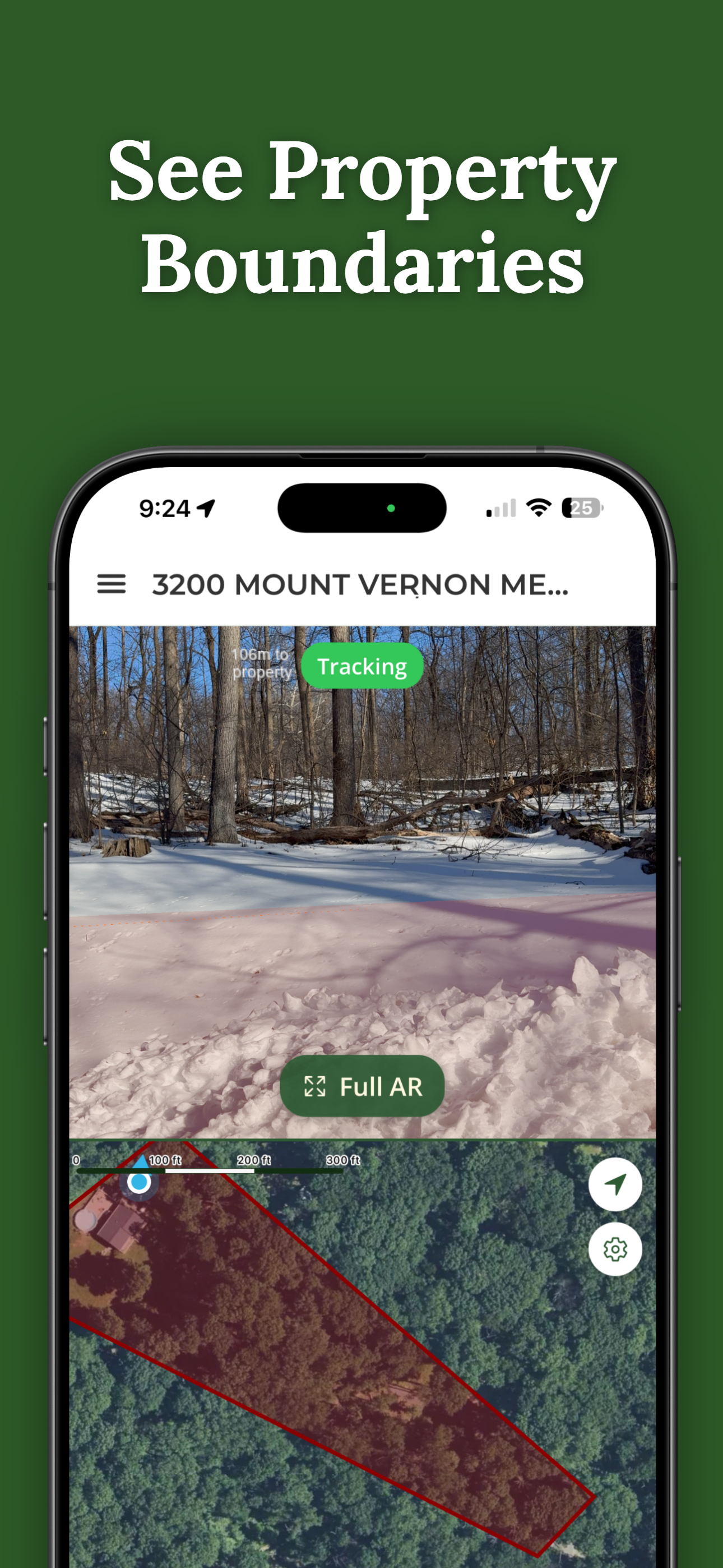
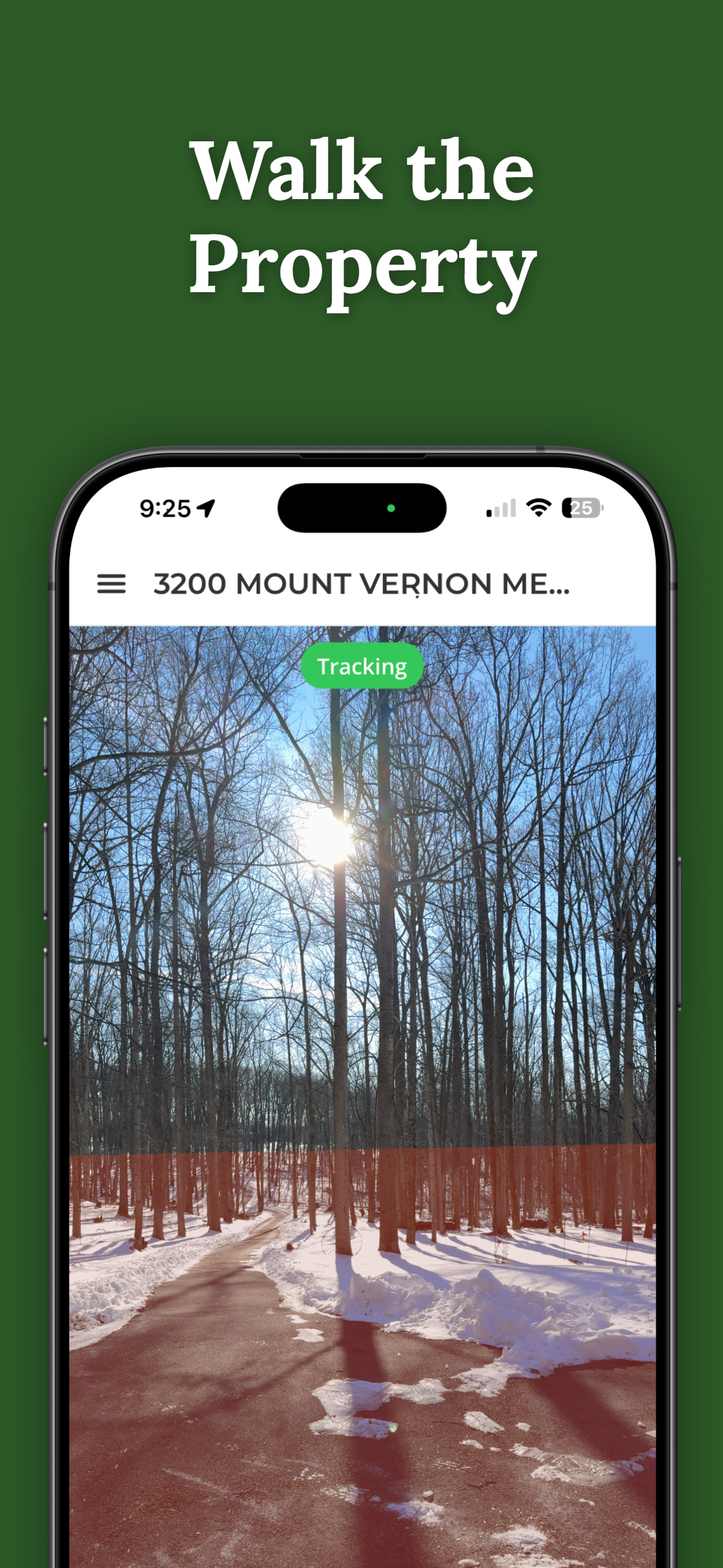
ParcelVision shows property boundary lines right on your iPhone screen using AR. Walk your yard and see where your property ends before you place a single post. It's the fastest way to get a visual gut-check on your fence placement.
Download ParcelVisionFence Placement Tips
Once you've got a handle on your property lines, here's how to actually place the fence right:
- Build a few inches inside your line. Don't put the fence right on the boundary. Set it back a few inches so the posts, the concrete footings, everything stays on your side.
- Put the nice side facing out. A lot of local codes require the finished side of the fence to face your neighbor. Check your ordinances — and honestly, it's just the polite thing to do.
- Have a conversation with your neighbor. A quick heads-up goes a long way. They might have opinions, they might not care, or they might even want to split the cost. Either way, surprises cause problems.
- Keep records of everything. Photos of survey markers, copies of your plat map, permits — save it all. If there's ever a dispute, documentation is your best friend.
- Call 811 before you dig. Seriously. One call gets your underground utility lines marked for free. Hitting a gas line with a post hole digger is not how you want your fence project to go.
When You Definitely Need a Survey
A survey is always smart, but in some situations it's basically mandatory:
- You can't find any survey markers or monuments on your property
- Your neighbor has already said they disagree about where the line is
- Your property has odd, irregular boundaries — not a neat rectangle
- You're building along a side that borders woods or undeveloped land
- Your permit office says you need one
- You're dropping serious money on the fence and want to protect the investment
A few hundred dollars now can save you thousands later. The peace of mind alone — knowing your fence is in the right place and nobody can make you move it — is worth every penny.
This article is for informational purposes only and isn't legal advice. Fence regulations, setback requirements, and survey laws vary by location. Check with your local building department and a licensed surveyor for guidance specific to your property.