ParcelVision
How to Find Property Pins and Markers
Property pins are iron rods or pipes that a surveyor drove into the ground at your property corners. You can find them with a metal detector, by checking near old fence corners, or by spotting survey caps at ground level. Most are buried 12 to 36 inches deep.
There's something genuinely satisfying about pulling back a clump of grass and finding a rusted piece of iron rebar that's been sitting in the dirt for 30 years, marking the exact corner of your land. It's like a treasure hunt — except the treasure is proof that your property is actually where you think it is.
If you want to know exactly where your property corners are, finding those original survey pins is the best place to start. Here's how to do it.
What Are Property Pins?
Property pins — sometimes called survey pins, boundary markers, or monuments — are metal markers that a licensed surveyor hammered into the ground at your property corners. They're the physical, real-world evidence of your legal boundaries.
A surveyor placed them based on precise measurements from your deed's legal description and plat map. Think of them as the connection between what's on paper and what's actually on the ground. In many cases, they've been sitting right where they were set for decades, just waiting to be found.
Types of Property Markers
What you'll actually find depends on when the survey was done and where you live:
- Iron rebar - The most common modern marker. Usually a half-inch or five-eighths-inch steel rod driven into the ground. Newer ones have a plastic or aluminum cap on top with the surveyor's license number stamped on it.
- Iron pipes - Older surveys often used hollow iron pipes, roughly three-quarters of an inch to one inch across. These are usually rusty and can be tricky to spot.
- Survey caps - Colored plastic or aluminum discs that sit on top of rebar. They're usually pink or orange, stamped with the surveyor's info, and they're the easiest markers to spot if they're above ground.
- Concrete monuments - Some areas use concrete posts or cylinders, especially for section corners. These can be several inches wide and are usually set flush with the ground or just above it.
- Brass discs - Set into concrete or rock, these are more common for government survey markers and benchmarks. You'll see them in some regions, though they're not as widespread.
- Railroad spikes or random iron - On older rural properties, surveyors sometimes used whatever was available — railroad spikes, axle pieces, or other iron objects as makeshift markers.
Tools You'll Need
You don't need much gear, but the right tools make a huge difference:
- Metal detector - Hands down, the most important tool. Even a cheap $50 metal detector can pick up iron rebar a foot or more underground. You don't need anything fancy for this job.
- Plat map or survey - You need to know the approximate distance between corners so you're searching in the right spot. Grab your plat map from the county recorder's office or your county's online GIS portal.
- Measuring tape or wheel - Helps you measure from known reference points — like the road or a neighbor's marker — to narrow down the search area.
- Shovel or trowel - When your metal detector lights up, you'll need to dig. A trowel works best for careful extraction.
- Flagging tape or spray paint - Once you find a pin, mark it. You don't want to lose it again after all that work.
Step-by-Step: How to Find Your Pins
- Get your plat map or survey - Pull up your lot dimensions so you know roughly how far apart the corners should be. If you've got a previous survey, even better — it may show exact pin locations.
- Start at a known reference point - Begin where you have the best idea of the boundary, usually your front lot corners near the road. Front corners are often set near the edge of the road right-of-way.
- Measure to the approximate corner location - Use your plat map dimensions and walk off the distance. If your front lot is 100 feet wide, measure 100 feet from one front corner to estimate the other.
- Sweep with the metal detector - Slow and steady wins here. Sweep in a grid pattern, overlapping your passes, and cover about 10 feet in every direction from your estimated point. You're listening for a strong, repeatable signal — not a faint blip.
- Dig carefully - Got a solid signal? Dig down with a shovel or trowel, being careful not to shift the pin. Rebar is typically 18 to 24 inches long, so you might need to dig a foot or more. When you hit metal and feel that rod, that's the moment.
- Mark what you find - Tie flagging tape around the pin or hit the ground nearby with bright spray paint. Don't skip this step — pins disappear back into the landscape faster than you'd expect.
Tips for Locating Difficult Pins
Sometimes pins don't want to be found. Here's what helps:
- Check near old fences - Fences often follow property lines, so pins tend to show up at or near fence corners. That said, don't assume the fence is exactly on the line — it rarely is.
- Clear the vegetation first - Pins love to hide under grass, leaves, and overgrown shrubs. Rake or clear the area before you start sweeping. You'll get much cleaner signals.
- Go out after a rain - Wet soil actually improves metal detector performance. A lot of people have better luck hunting pins the day after a good storm.
- Check both sides of the sidewalk - Front property pins can be on either side, depending on where the right-of-way line falls. If you're not finding it on one side, try the other.
- Expect false signals - Buried sprinkler heads, old nails, wire — all kinds of metal junk will set off your detector. If you dig and don't find a pin, mark the spot and move on. Come back to it after you've found the other corners, when you have a better sense of the layout.
What If You Can't Find the Pins?
You've been out there for hours and still nothing. Don't panic — there are a few reasons pins go missing:
- The pin was never set in the first place (this happens more often than you'd think, especially on older properties).
- Construction, landscaping, or road work disturbed or removed it years ago.
- It's deeper than expected because soil got added over the years or erosion shifted things around.
If you've given it a thorough search and come up empty, it's time to hire a licensed surveyor. They have professional-grade equipment and — more importantly — the legal authority to re-establish your corners and set new pins. This is especially worth doing if you're planning to build a fence, put up a structure, or sort out a boundary disagreement with a neighbor.
Don't Remove or Move Pins
This is a big one: in most states, it's actually illegal to knowingly remove, alter, or destroy a survey marker. These pins are official legal boundary references, and messing with them can land you in real trouble. If a pin gets accidentally bumped during construction or landscaping, call a surveyor to reset it properly. Don't just leave it or try to put it back yourself.
Skip the Guesswork
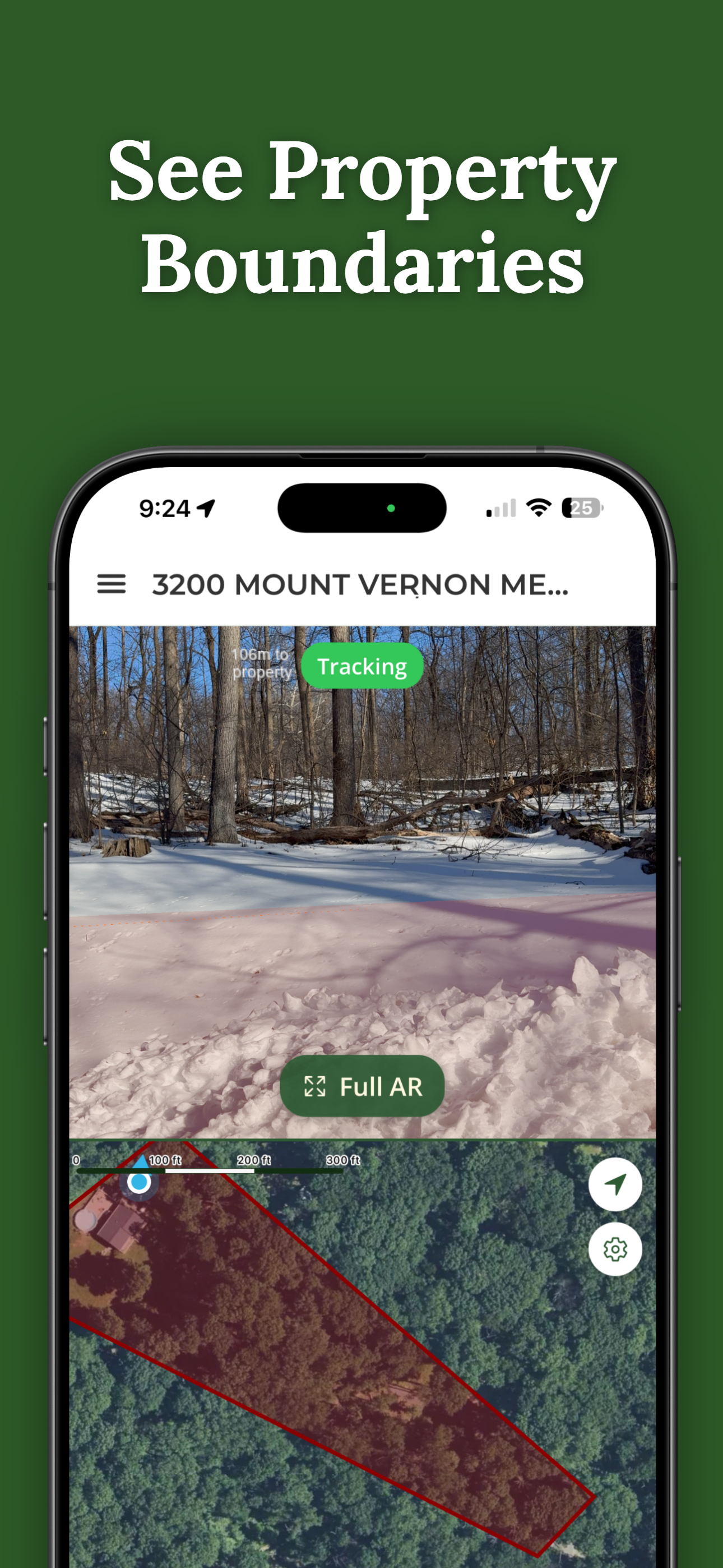
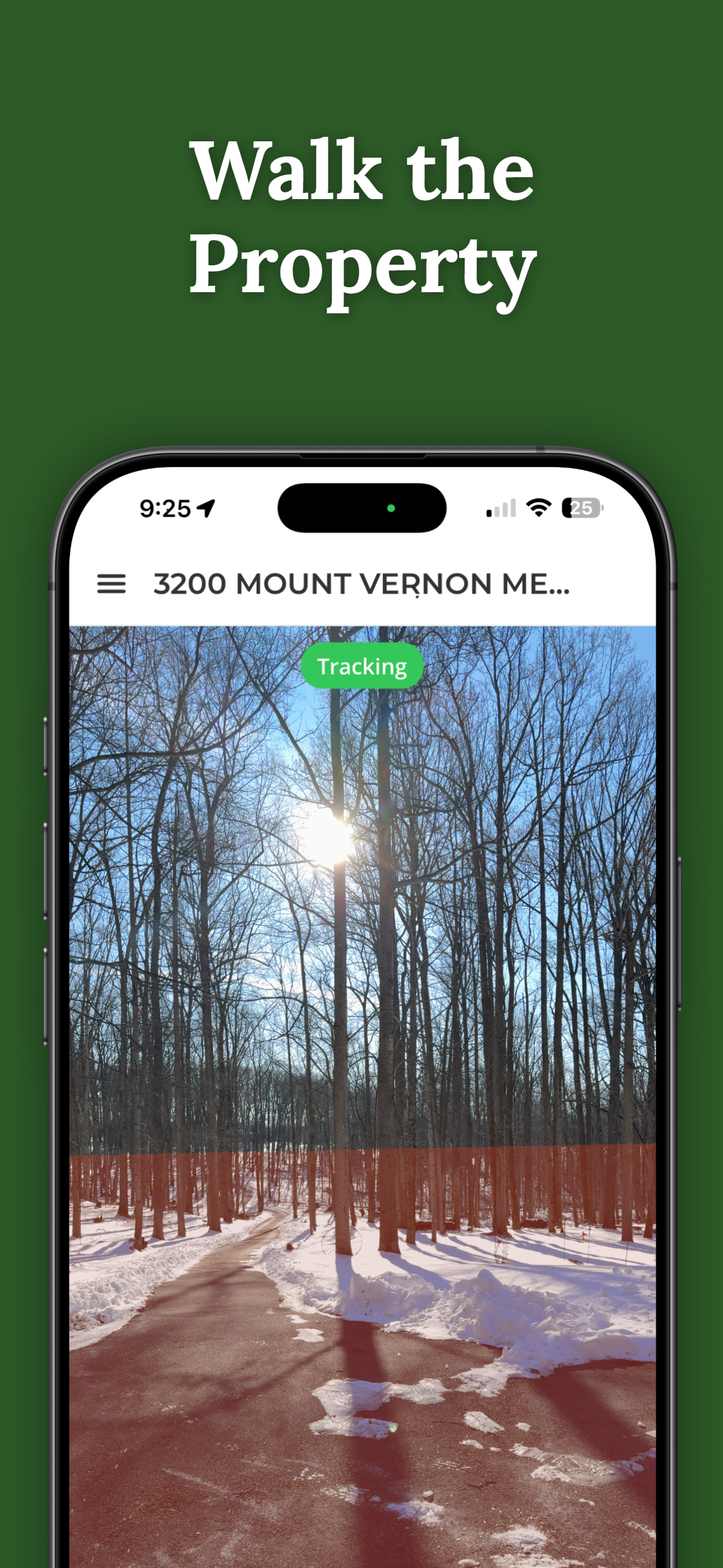
ParcelVision shows your property boundaries in augmented reality right on your iPhone. Walk to the approximate corner locations before you even pull out the metal detector — you'll know exactly where to start digging instead of sweeping the whole yard.
Download ParcelVisionThis article is for informational purposes only and isn't legal advice. For precise boundary determinations, consult a licensed surveyor in your area.