ParcelVision
How to Settle a Property Line Dispute
Start by gathering your deed, plat map, and any existing survey. Talk to your neighbor calmly — many disputes are just misunderstandings. If that doesn't work, hire a licensed surveyor to establish the legal boundary. Most disputes end with a boundary line agreement signed by both parties, no lawyers or courtrooms needed.
If you're reading this, there's a good chance you're already in the middle of it. Maybe your neighbor put up a fence that looks like it's a few feet onto your side. Maybe they poured a driveway that doesn't seem right. Maybe it's a tree, a shed, or just a disagreement about where "your yard" ends and "their yard" begins.
Take a breath. These disputes are stressful, but they're also incredibly common — and most of them get resolved without anyone stepping into a courtroom. Here's a clear path forward.
Step 1: Gather Your Documentation
Before you say another word to your neighbor, get your facts straight. Collect everything you can find that relates to your property boundaries. This isn't about building a legal case — it's about having something concrete to point to instead of arguing over feelings and assumptions.
- Your property deed. The legal description defines your boundaries using metes and bounds, lot and block numbers, or other survey references. It's the starting point for everything.
- Plat map or subdivision map. If you're in a subdivision, the plat map shows lot lines, dimensions, and easements. Grab it from your county recorder's office or look it up on the county GIS website.
- Existing surveys. If a survey was done when you bought the place — or anytime since — that's your strongest document. It should show exact boundaries, pin locations, and any encroachments.
- Title insurance policy. Your title policy may reference easements, boundary descriptions, and exceptions that could be relevant.
Ask your neighbor to pull their documents too. Sometimes just laying both sets of paperwork on the table reveals where the confusion started.
Step 2: Have a Conversation with Your Neighbor
This is the step people either skip or botch. Don't do either.
Most property line disputes start from a misunderstanding, not bad intentions. Your neighbor probably isn't trying to steal your land — they genuinely think the line is somewhere different. So approach the conversation with that in mind. Share what you've found, ask to see their documents, and keep it focused on facts rather than accusations. One calm conversation at this stage can save you both thousands of dollars.
If it gets heated, stop. Walk away, cool down, and move to the next step. Pushing a tense conversation past its breaking point will only make everything harder from here.
Step 3: Hire a Licensed Surveyor
If you and your neighbor can't agree on where the line is, a professional survey settles the question. A licensed surveyor will dig into the deed records, find the original survey monuments, and use precise measurements to determine the legal boundary.
They'll set stakes or markers along the line and hand you a written report with a map showing exactly where your property ends and your neighbor's begins. That report carries legal weight — it can be used in negotiations, mediation, or court if things go that far.
For a typical residential lot, expect to pay somewhere between $300 and $1,000. Larger or more complex properties cost more. That might feel like a lot, but compare it to the cost of a lawyer and a court fight — a survey is a bargain.
Step 4: Consider Mediation
So the survey confirmed what you suspected, but your neighbor still doesn't agree. Or maybe they agree on the line but won't remove the fence or structure that's over it. This is where a mediator comes in.
A mediator is a neutral third party who sits down with both of you and helps work out a solution. It's less formal than court, way cheaper, and way less hostile. A lot of communities have local dispute resolution centers that offer mediation services, sometimes at a reduced rate.
Mediation works especially well for boundary disputes because — let's be honest — you still have to live next to this person. A court battle poisons the well. Mediation gives you both a chance to solve the problem and still wave to each other in the morning.
Step 5: Draft a Boundary Line Agreement
Once you've both agreed on where the line is, put it in writing. A boundary line agreement is a document signed by both property owners that spells out the agreed-upon boundary. Record it with the county, and it becomes part of the official property records.
This is worth doing even when both sides accept the survey results, because it eliminates any future ambiguity. It's especially useful when the practical boundary — say, an existing fence — sits a foot or two off from the legal line, and both of you agree to just go with the fence. A written agreement makes that official.
Have a real estate attorney draft it or at least review it. You want to make sure it's enforceable in your state.
When You Need an Attorney
Plenty of disputes get resolved without lawyers. But some situations genuinely call for one:
- Your neighbor built a permanent structure on your land and flat-out refuses to move it.
- There's an adverse possession claim — your neighbor says they've used part of your land long enough to legally own it.
- The disputed area involves a significant chunk of land or a big difference in property value.
- Mediation failed and you need to file a quiet title action — a court proceeding that formally establishes who owns what.
- There's already a survey or boundary agreement in place, and the other side is ignoring it.
Preventing Future Disputes
Once this mess is behind you, do yourself a favor and make sure it doesn't happen again. Get a survey if you don't have one. Make sure the boundary markers are visible and clearly flagged. Record any agreements with the county so there's a paper trail.
If you're putting up a fence, set it a few inches inside your property line rather than right on the boundary. It's a small concession that prevents a whole new round of arguments.
And if you're buying a new property? Get a boundary survey before closing. Knowing exactly where your lines are on day one is infinitely easier than finding out there's a problem after you've already unpacked.
Get a Quick Visual of Your Boundaries
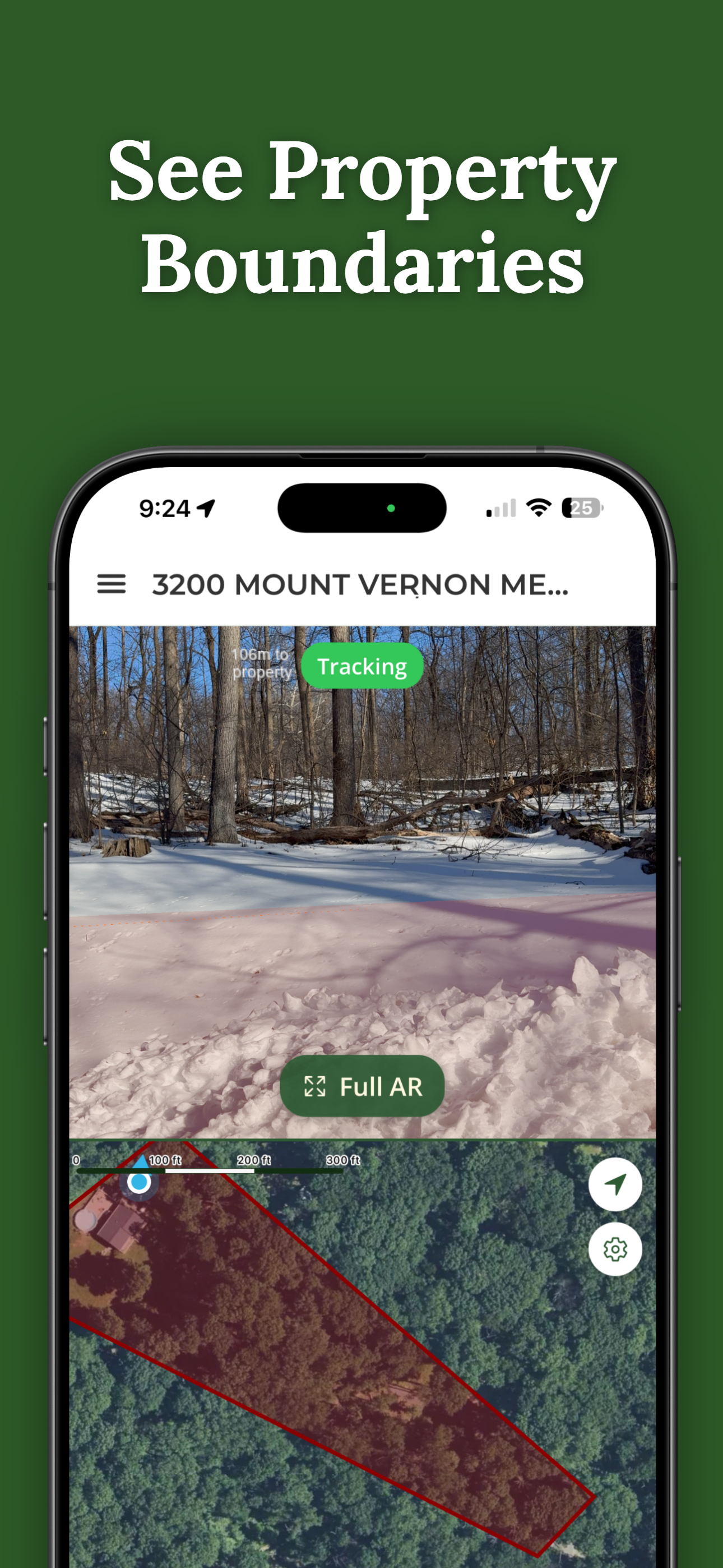
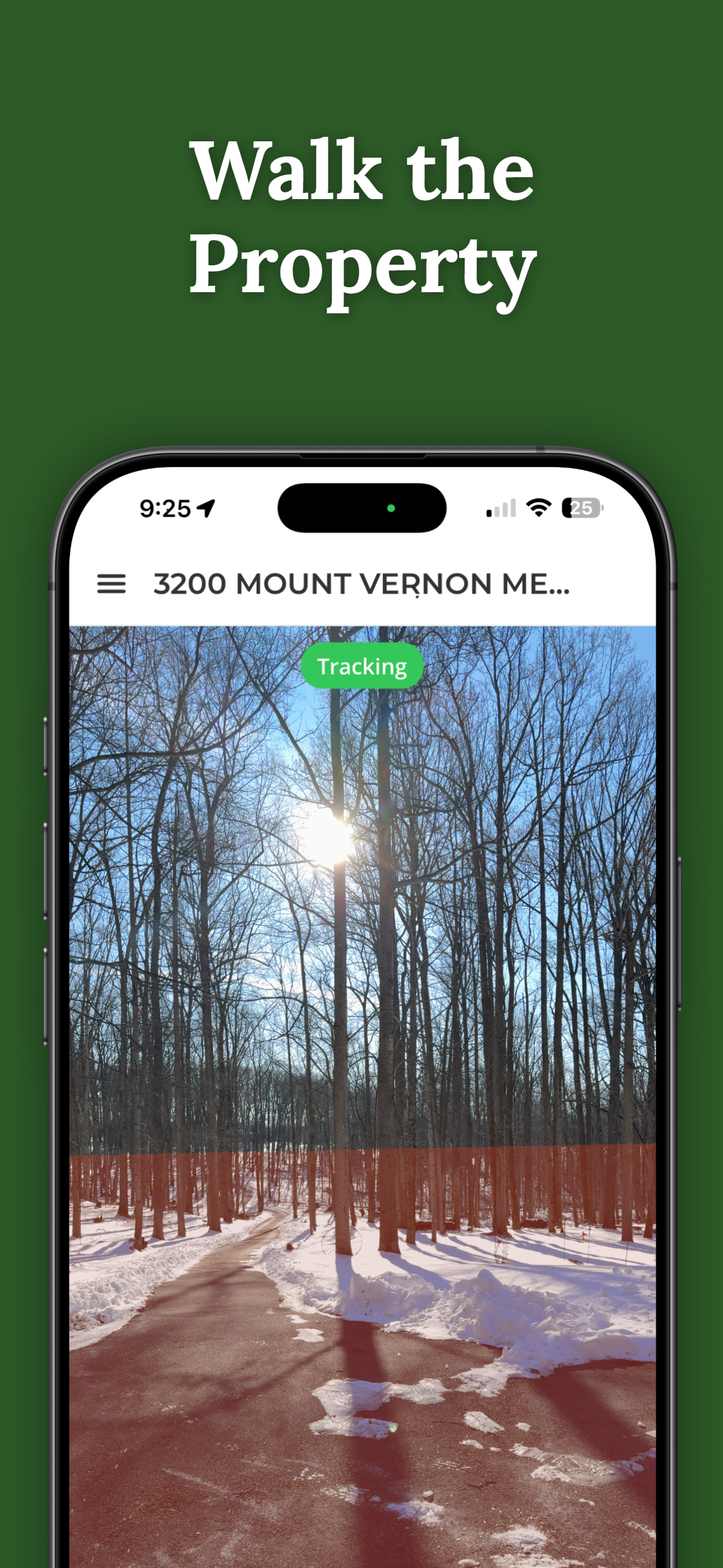
ParcelVision overlays your property lines on the real world using augmented reality. If you're trying to figure out where your boundary runs in relation to a fence, a shed, or that row of trees your neighbor planted, the app gives you a visual starting point — before you spend money on a surveyor or have that next conversation.
Download ParcelVisionThis article is for informational purposes only and isn't legal advice. Property line disputes involve state and local laws that vary by jurisdiction. Talk to a licensed attorney for advice on your specific situation.